Our Guide to Renting & Driving a Campervan in Ireland
A first-timer’s guide to Campervanning in Ireland: Everything you need to know for your first campervan road trip in Ireland, from selecting the perfect campervan and planning your route to managing waste disposal.
Exploring Ireland by campervan is an adventure that offers an intimate glimpse into the island’s breathtaking landscapes, rich history, and vibrant culture. Renting a campervan allows you the freedom to explore at your own pace, uncovering hidden gems far from the usual tourist trails.
And here’s our comprehensive guide to making the most of your campervan journey across Ireland.
Choosing the Right Campervan
Renting a campervan in Ireland is relatively straightforward, with numerous rental companies offering a range of motorhomes tailored to different needs and budgets. So, no matter if you’re a solo traveler, a couple, or a family, there’s a perfect campervan for you.
Options range from compact vans ideal for navigating narrow country roads to larger motorhomes with ample space. It’s crucial to consider factors like vehicle size, driving experience, and the level of comfort you desire before making your booking.
You will likely need to pick up your campervan in major cities like Dublin, Cork, or Belfast, or at the larger airports like Dublin Airport and Belfast Airport.
I will also add that campervan rentals tend to sell out quickly during the busy summer season (from June through to September).
🚙 Where to rent a campervan in Ireland
- West Coast Campervans – pick-up locations at Dublin Airport and Newry, Northern Ireland
- Motorhome Republic – a comparison and booking site for campervans
- Craic n Campers – pick-up locations in Roscommon and Greystones, Wicklow
- Bunk Campers – pick-up locations in Dublin and Belfast
- Indie Campers – pick up from Dublin
- Retro Camper Hire – pick up from Dublin
- South Coast Motorhome Hire – pick up from Bandon, Cork
Some or most companies can meet you at a different location for an extra fee, but make sure to ask them about this in advance.
If you’re considering bringing your own campervan to Ireland, you’ll need to take a ferry from the UK. You have a variety of departure ports to choose from, such as Liverpool, Pembroke, Cairnryan, and Holyhead. These ferries offer routes to destinations like Dublin, Belfast, Larne, and Rosslare.
You can search for available campervans in Ireland here via Motorhome Republic (a search engine for motorhomes in Ireland, where you can compare prices across different companies and book) –
Planning Your Route
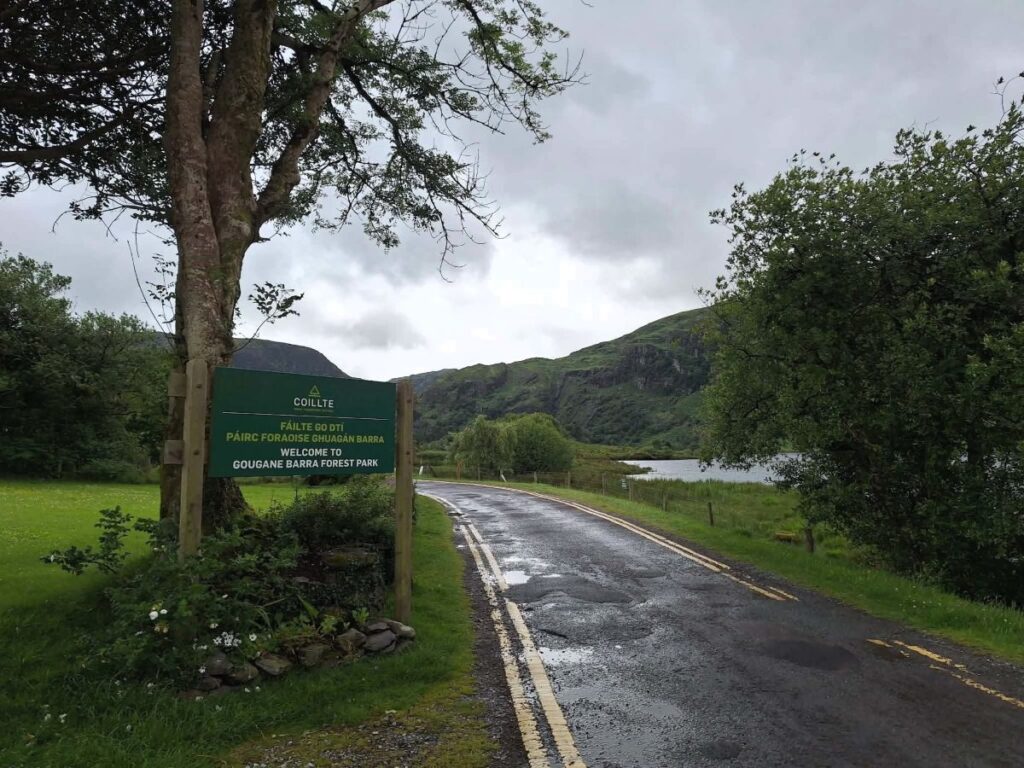
Ireland’s compact size makes it ideal for a road trip, but its wealth of attractions means careful planning is essential to maximize your experience. Popular routes include the iconic Wild Atlantic Way, which stretches over 2,500 kilometers along the west coast, offering dramatic cliffs, sandy beaches, and picturesque villages.
Alternatively, the Causeway Coastal Route in Northern Ireland boasts stunning views and landmarks like the Giant’s Causeway. For those seeking a less-trodden path, the Hidden Heartlands and the Ancient East routes reveal Ireland’s cultural and historical treasures.
Navigating Ireland’s Roads
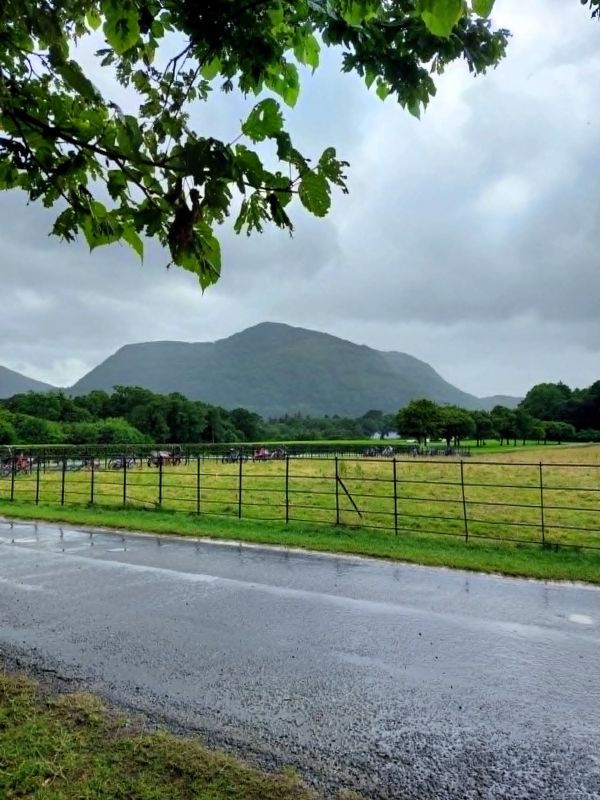
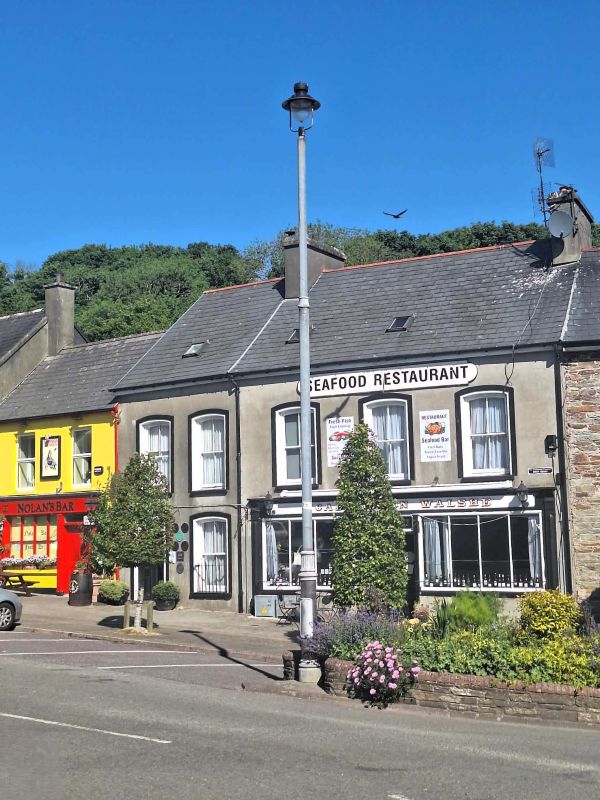
Driving a campervan in Ireland sure can be fun, but it does come with challenges, especially for those unaccustomed to driving on the left side of the road.
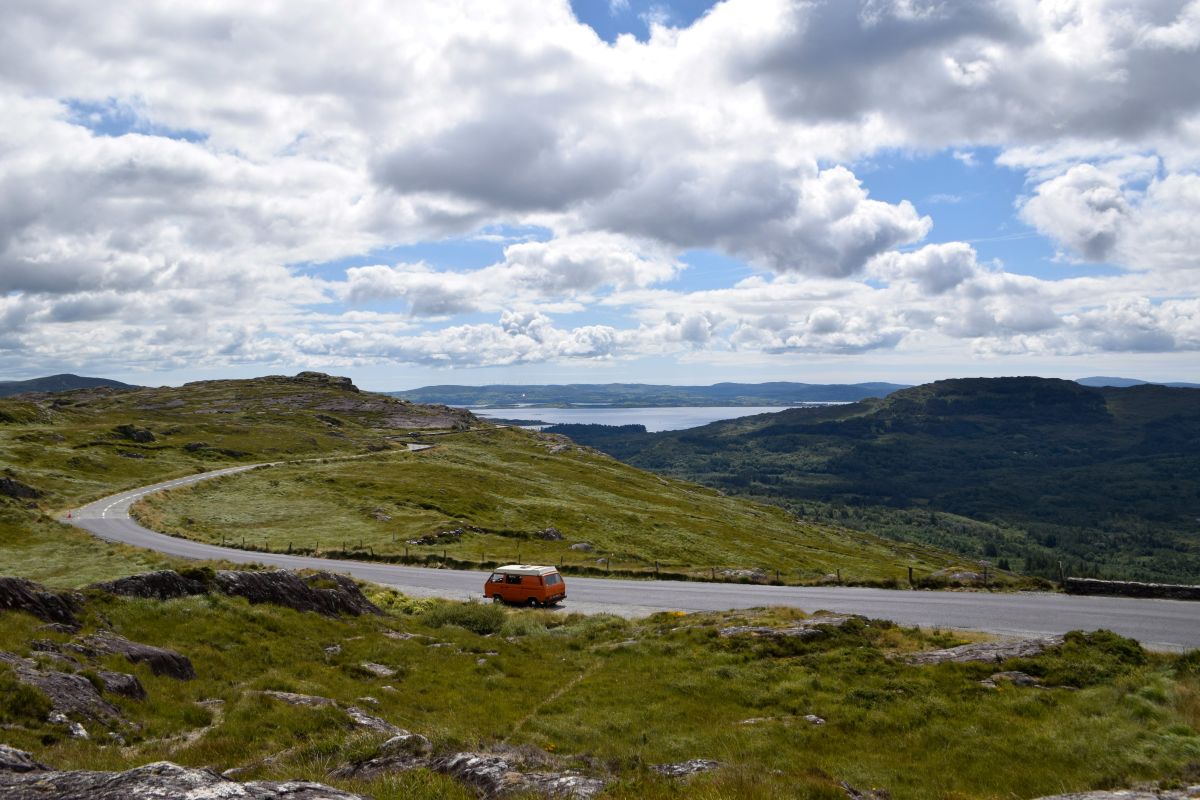
Now, most of the roads in Ireland that link towns and cities are in good condition, so you should find them easy to drive. However, in more rural areas, some of the roads can be very narrow, twisty, and dotted with potholes. Hence, it pays to drive cautiously when traveling on those. Plus, there is little to no shoulder on these roads, so you have to be careful not to drive into the ditch!
It is worth noting, too, that in some rural areas, you might experience gravel roads or really narrow roads with grass growing down the middle (if you’ve been to rural Ireland, you’ll know what I mean).
GPS and offline maps are invaluable tools, as mobile signal can be patchy in remote areas.
And please keep an eye on height limits when driving into car parks in Ireland – many (especially the multistorey car parks in cities) aren’t designed for larger vehicles.
Legalities and Essentials
Before setting off, ensure you have all necessary documentation, including a valid driver’s license and insurance. And you likely won’t need to get an International Driving Permit. unless you plan on being in Ireland for more than 12 months.
Most rental companies provide insurance, but it’s wise to check what’s covered and consider additional coverage for peace of mind. We highly recommend selecting fully comprehensive car insurance if it’s not already included. The roads and car parking spaces in Ireland are narrow, so it will quell your fears of getting a bump or scratch. Check if your credit card insurance covers this (some do!)
Fuel stations are scattered across the country, but in remote areas, it’s best to keep your tank topped up. Familiarize yourself with local driving laws and speed limits, which are typically posted in kilometers per hour.
Also note that you will likely be driving a stick shift campervan here – that’s because manual or stick shift vehicles are more prevalent than automatics. So if you need an automatic, be sure to request an automatic when renting a campervan, as otherwise you likely will end up with a manual transmission vehicle (stick shift).
Practice makes perfect for driving in Ireland!
Because I’m someone who likes to be prepared when I travel, I’ve recently checked out Tripiamo’s Ireland Driving Guide. It’s a video driving guide that is specifically designed to teach you how to navigate Ireland’s challenging roads. It’s validated by the Irish School of Motoring and by completing this detailed driving guide (there are 11 sections), you’ll feel confident to tackle driving in Ireland. The course costs just $39.99 USD – a worthy investment, in my opinion!
Campsites in Ireland
Ireland offers a wealth of campsites that cater to campervans, often with stunning views and excellent facilities. Sites like Nagle’s Doolin Camping & Caravan Park, located near the Cliffs of Moher, or Eagle Point Camping in Bantry Bay, are popular choices.
🚙 Our top pick of campsites in Ireland for motorhomes:
- Nagle’s Doolin Camping & Caravan Park, Clare
- Eagle Point Camping in Bantry Bay, Cork
- Nore Valley Park, Kilkenny
- Clifden Eco Beach, Galway
- Sleepy Hollows, Donegal
- Hook Peninsula, Wexford
While wild camping is technically illegal, it’s sometimes tolerated in more remote areas with landowner permission. Always adhere to the Leave No Trace principles, respecting the environment and local communities. Safe Nights Ireland is a good place to find more information about wild camping in Ireland.
Does Ireland have Aires?
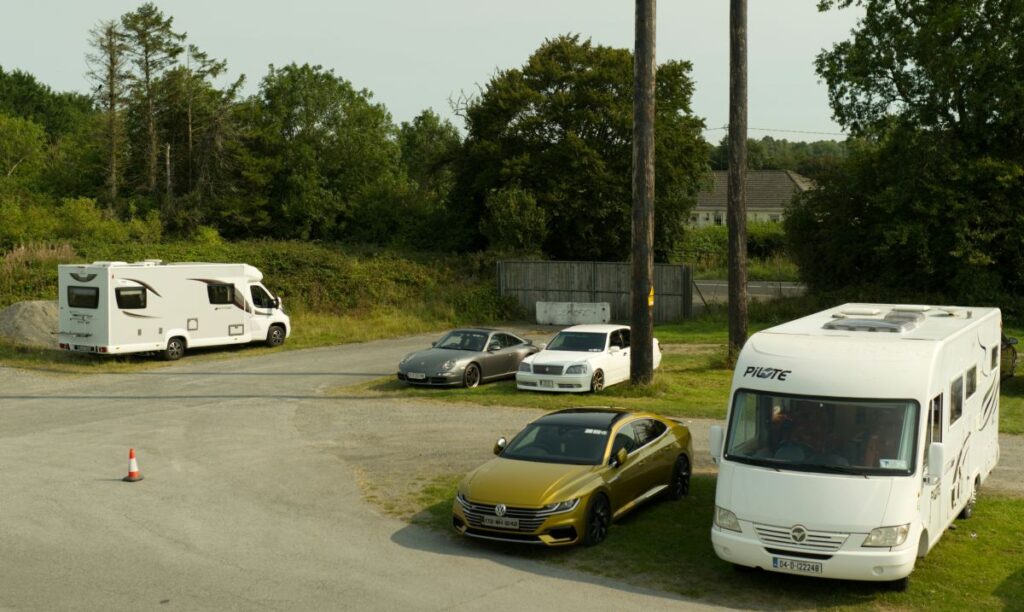
If you’re familiar with traveling around Europe, you’re likely aware that countries such as France, Italy, and Germany offer dedicated overnight spots known as Aires. The word ‘aire’ is short for the French term ‘aire de service’, which is essentially a free or low-cost motorhome camping area where some basic services – such as water, waste disposal and maybe even toilets/showers and electricity – are available.
Sadly, Ireland, much like the UK, lacks similar facilities. However, there are a few locations in Ireland that provide approved motorhome parking similar to an Aire. For example, there is a popular Aire in Kenmare, County Kerry, and one in Cobh, County Cork – as well as several others dotted throughout the country. Always remember to verify the local regulations if you plan to stay somewhere other than a campsite.
You can connect with other campervanners and find out more information about the best Aires in Ireland on the Facebook group Motorhome Aires in Ireland.
How do I empty the toilet tank?
Definitely not something I ever liked doing – my husband did this task 99% of the time – thankfully! It’s worth noting that a campervan has two waste tanks – a grey water tank (water from the shower and sink) and a black water tank (from the toilet).
Some campgrounds will have a hookup for the sewage pipe, and you just leave that connected and don’t worry about emptying anything. But at the majority of campgrounds we stayed at, you have to empty the tanks at their dumping station.
There’s a control panel in your campervan that tells you how full your tanks are. Typically, you would empty them every few days – no longer as when it’s full, it can weigh down the vehicle, and thus you’ll use more fuel.
What does it include/ what do I need to pack?
Most motorhome companies offer cooking equipment and kitchen utensils and an emergency kit as standard, but you can add extras like towels, duvets, etc., to your booking. Some companies offer these for free, but some charge extra.
Adding these to your reservation means you don’t need to bring them with you (which will be very difficult if you’re coming from overseas).
Most companies in Ireland also offer unlimited mileage, roadside assistance, and comprehensive insurance for one driver.
Some other items that may come in handy to bring with you include:
- Universal travel adapter
- Portable power bank
- Reusable water bottle
- Travel first aid kit
- Headlamp
- Leatherman multi tool
Must-See Destinations in Ireland
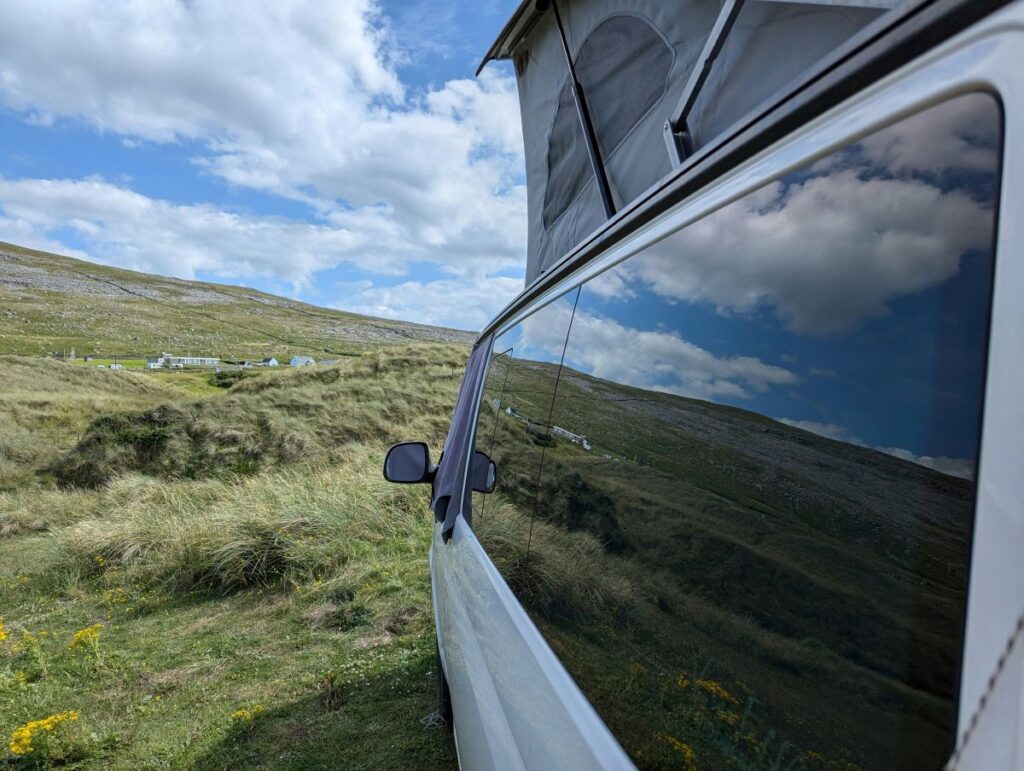
Ireland is renowned for its scenic driving routes. And there are loads of epic drives that you can embark on that showcase the country’s incredible natural beauty and rich history.
Of course, the Wild Atlantic Way is one of the most famous. And it’s my personal favorite Irish road trip. The Wild Atlantic Way runs from Kinsale in West Cork all the way to Donegal. At 2,500 km long, it is the longest coastal driving route in the world.
Another favorite drive of mine is the astoundingly beautiful Ring of Kerry. Which is 180 km long and starts in Killarney (one of the must-visit towns in Ireland). Some must-stops along the Ring of Kerry include Killarney National Park, Glenbeigh, Caherdaniel, Sneem, and Kenmare.
The Slea Head Drive, which starts and ends in the vibrant town of Dingle, is also super-popular and for good reason. It offers what I reckon is the best coastal scenery in the whole country!
In Northern Ireland, the Causeway Coast Drive is an absolute must-do. It begins in Belfast and ends in Derry and passes through the nine Glens of Antrim and the world-famous Giant’s Causeway.
Slainte!
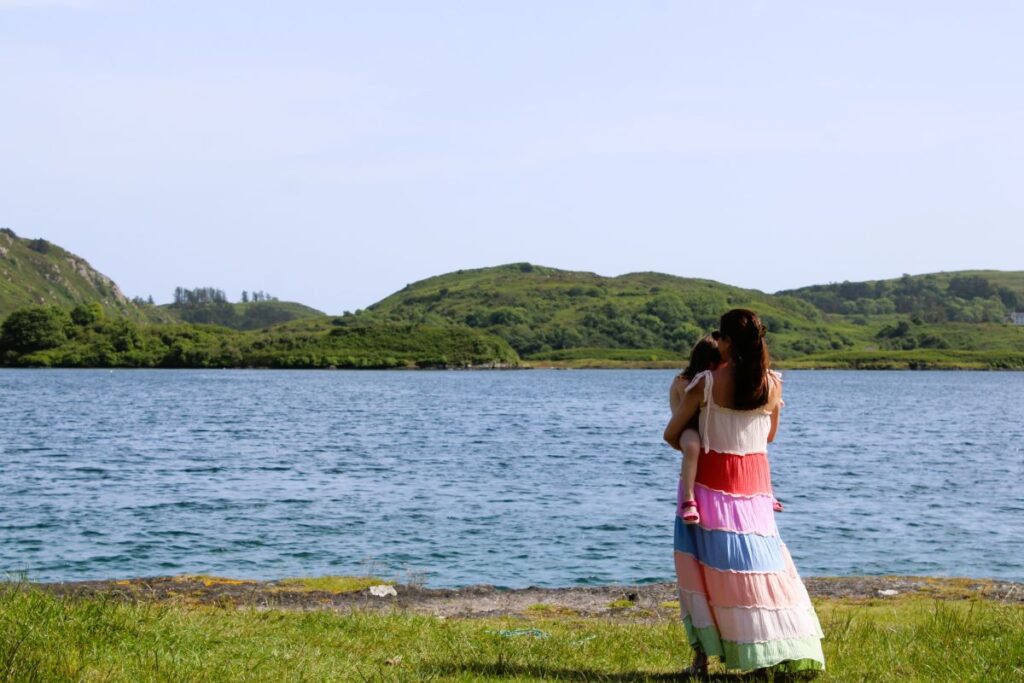
Driving a campervan in Ireland is more than just a mode of transportation – it means you have the freedom to chart your own course, discover off-the-beaten-path gems, connect with the Irish locals, and create memories that last a lifetime.
And yes, it can be a challenge to drive a campervan along some of Ireland’s roads. However, the reward is the ability to meander through quaint villages, past emerald-green fields dotted with sheep, and along coastal roads with views that take your breath away.
You may also like to read –
My guide to renting a car in Ireland