Understanding Irish Place Names (The Gaelic meaning of Irish towns and cities)
In ancient Gaelic Ireland, towns were few and far between, leading the locals to name places based on the surrounding scenery. Irish place names are predominantly derived from the original Irish (Gaelic) language, with about 90% reflecting local geography, historical events, or land use.
And about 150 years after Ireland was first mapped and its towns’ names were recorded, English surveyors came in to map Ireland, and many were unfamiliar with the Irish language. They transcribed the names phonetically, preserving the sound almost perfectly while losing the meaning entirely.
This resulted in several approaches to naming: sometimes the original Irish names were disregarded entirely in favor of new ones, particularly in areas of plantation, such as when Uibh Failghe became King’s County, now known as County Offaly, and Laoighis became Queen’s County, now County Laois.
Knowing a bit about the meaning behind Gaelic place names can really help you get around and chat with the locals; most of us are super proud of our language. It really is a great way to dive deeper into Irish culture.
Famous places in Ireland and their meaning
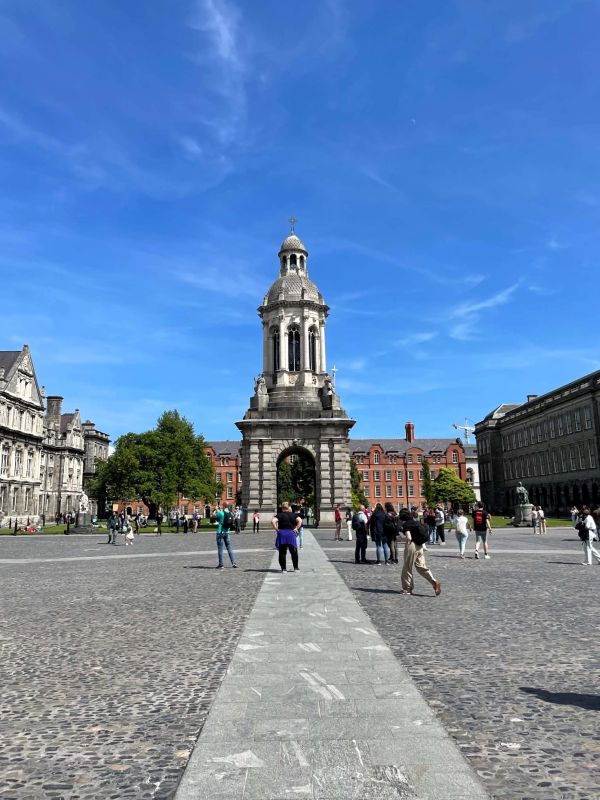
Dublin – Dubh Linn
Dublin, or Dubh Linn, translates to “The Black Pool.” This unusual name harks back to a time when a dark tidal pool formed by the Poddle stream meeting the River Liffey graced the area near present-day Dublin Castle. Although the Poddle is now culverted and the pool long vanished, the city’s name preserves this memory.
Interestingly, Dublin City’s Irish name, and the one you’ll see on most signposts – Baile Átha Cliath- means “the town of the hurdled ford,” reflecting another aspect of its rich heritage. Yes, two different Gaelic names tell the story of one remarkable place.
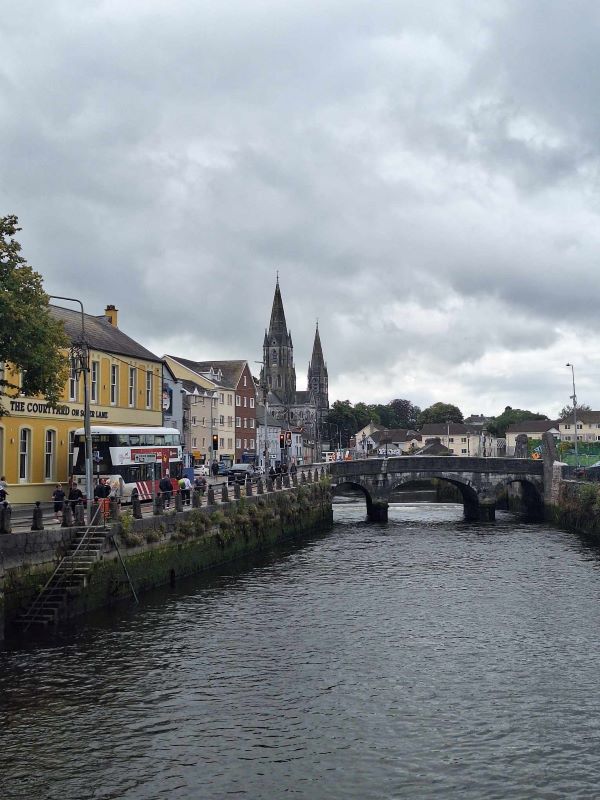
Cork – Corcaigh
Which basically means a marsh. This name reflects the city’s geographic origins, as Cork was originally established on marshy land surrounding the River Lee. The river flows through the city, and historically, the area was characterized by its wetlands and tidal waters. Over time, the marshlands were developed and reclaimed, transforming Cork into the bustling city it is today.
The name “Corcaigh” serves as a historical reminder of the city’s roots and its connection to the natural landscape that shaped its early development.
As a result, buying a house in Cork City requires close attention to subsidence and marshland, because large sections of the city and its suburbs were built on soft, low-lying estuarine mudflats and limestone bedrock; structural shifting is a widespread local issue.
Belfast – Béal Feirste
Belfast’s name is derived from the Irish words “béal” meaning “mouth” and “feirste” referring to the sandbank or ford in the river. This name reflects Belfast’s location at the mouth of the River Farset, which was a significant crossing point.
Over time, the River Farset was largely covered over, and today it runs beneath the city’s streets. The name encapsulates Belfast’s historical role as a meeting point and a hub of transportation and trade.
Sligo – Sligeach
Sligo’s Gaelic name, “Sligeach,” translates to “abounding in shells” or “shelly place.” This name reflects the area’s rich historical connection to the sea and its natural resources. The abundance of shellfish in the local rivers and coastal areas was likely significant to the early inhabitants, who relied on these resources for sustenance.
Galway – Gaillimh
The name is derived from the word “Gaillimh,” which refers to the River Corrib, historically known as the River Gaillimh. According to legend, the name originated from the story of Gaillimh, the daughter of a mythical chieftain who was drowned in the river.
Blarney – An Bhlarna
“Blarna” is derived from “blár,” which can mean a field, plain, or meadow. Therefore, it is believed “An Bhlarna” translates to “the plain” or “the field,” reflecting the lush, green landscape surrounding the Blarney area.
Kinsale – Cionn tSáile
The Gaelic name for Kinsale is “Cionn tSáile,”. “Cionn” translates to “head” or “tip,” and “Sáile” means “sea.” Therefore, “Cionn tSáile” can be interpreted as “Head of the Sea” or “Tip of the Sea.” This name reflects Kinsale’s position on the coast; it’s situated at the head of a sheltered harbor where the River Bandon flows into the Atlantic Ocean.
Dingle – An Daingean
The Gaelic name for Dingle, “An Daingean,” translates to “The Fortress” or “The Stronghold.” This name reflects the town’s historical significance as a fortified settlement. Dingle has a rich history that dates back to ancient times when it served as a strategic defense point. Thus, its Irish name encapsulates the town’s role as a protective stronghold against invaders.
Killarney – Cill Airne
In Irish, “Cill” translates to “church” or “cell,” and “Airne” is believed to refer to “sloes,” which are the berries of the blackthorn tree. Thus, “Cill Airne” can be interpreted as “Church of the Sloes” or “Church of the Blackthorn.” This name reflects not only the area’s lush natural environment, with its abundance of flora, but also its historical roots as a spiritual and community hub.
Clonmel – Cluain Meala
The Gaelic name for Clonmel, “Cluain Meala,” translates to “Meadow of Honey” in English. This pretty name reflects the area’s natural beauty and fertility, suggesting a landscape abundant with wildflowers and thriving beehives. Traditionally, such names were given to places to highlight their most prominent or appealing features. In the case of Clonmel, the “Meadow of Honey” likely alludes to the rich agricultural land and the lush, vibrant environment that would have been ideal for honey production.
Kildare – Cill Dara
Means the church of the oak. It originates from the early Christian period in Ireland and is associated with St. Brigid of Kildare, one of Ireland’s patron saints. St. Brigid is said to have established a monastery in Kildare around the 5th century, choosing the site because of a large oak tree under which she prayed.
Donegal – Dún na nGall
Translates to the fort of the foreigners. This name reflects the region’s history, particularly during the Viking Age when Norsemen established settlements and fortifications in parts of Ireland. The term “Gall” refers to foreigners or outsiders, most notably the Vikings in this context. The “Dún” part of the name means “fort,” indicating a place of defense or stronghold.
Understanding Irish place names – the Gaelic words
Learn a handful of words, and you can read most of the signposts in Ireland.
- Baile (Bally): Means “town,” “homestead,” or “place of” (e.g., Ballycotton, Baile Átha Cliath / Dublin).
- Cill / Coill (Kil / Kill): Can mean “church” (cill) or “wood” (coill) depending on the local roots and history (e.g., Kildare).
- Dún (Dun / Don): Means “fort” or “fortress” (e.g., Dún Aonghasa).
- Carrig (Carrick): Means “rock” or “stone” (e.g., Carrick-on-Shannon).
- Cluain (Clon/ Cloon): Means “meadow” or “pasture” (e.g., Clonakilty).
- Cnoc (Knock-): Means “hill” (e.g. Knockraha).
Now, consider how many of those things have vanished over time.
The church crumbled centuries ago, its wood repurposed for English ships. The ford was replaced with a bridge, and the ring fort gradually disappeared beneath the grass, with the farmer now ploughing around it.
All that remains is the name, a solitary testament to their existence.
And as I said above, there’s another layer to this story. When English surveyors mapped Ireland, many were unfamiliar with the Irish language. They transcribed the names phonetically, preserving the sound almost perfectly while losing the meaning entirely.
As a result, generations of Irish people have lived their entire lives in a townland, unaware that its name is a straightforward description of the place, in a language they don’t speak every day but were taught in school.
Tell me – what’s your hometown, and do you know what it means? The comment section is below…