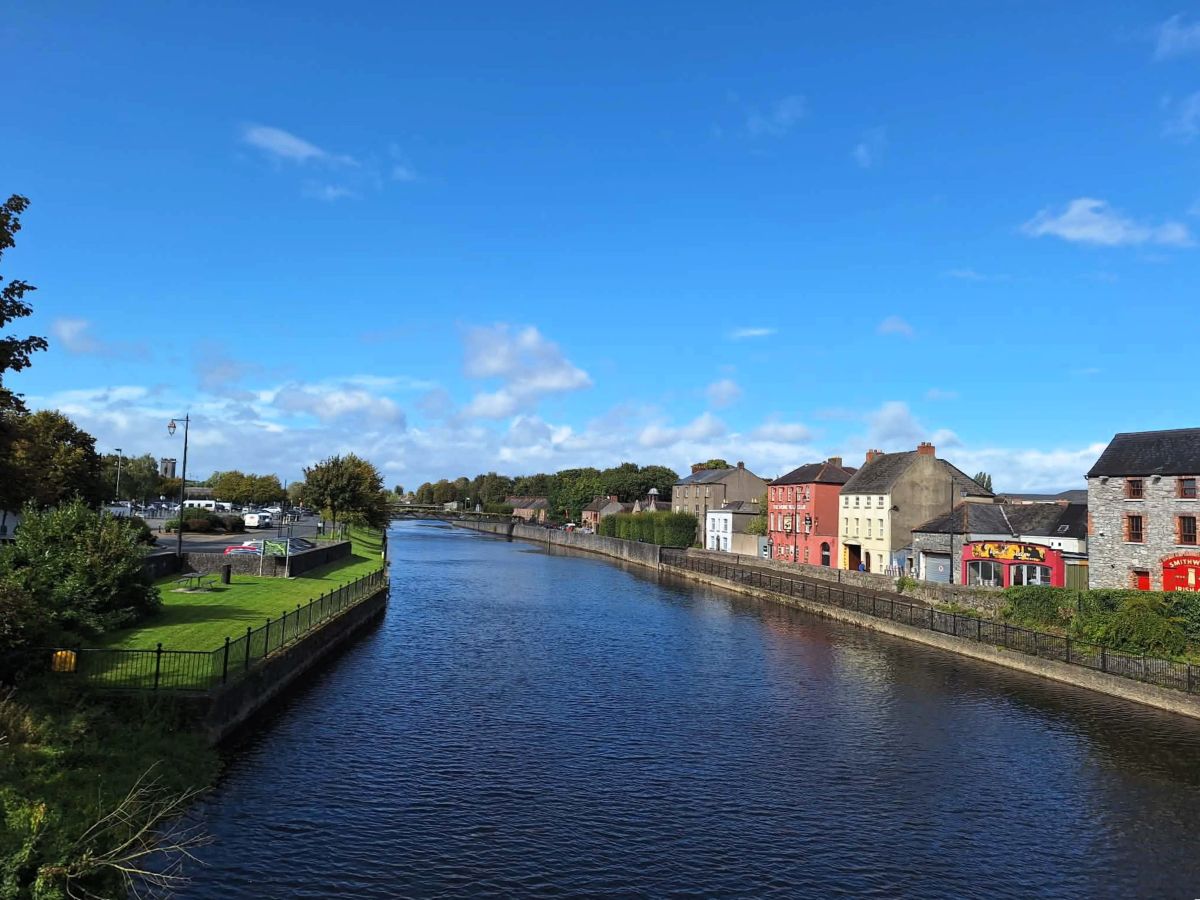
Driving from Cork to Kilkenny (Where to Stop Along the Way)
The drive from Cork City to Kilkenny is just under two hours (154 km) without stops, and it follows the M8 motorway for most of the way.
But, I highly recommend making a few stops to break up the journey as there are some pretty epic places along this drive – such as Cahir Castle and the Rock of Cashel. And if you stop at all of the places below, you will need to allow a full day.
There is a toll along this route for which you will need to pay €2.30 (for a standard car) at the booth. If you want to avoid the toll, you may take exit 17 from the M8, which will take you onto the R639, then, after around 25 minutes, you can rejoin the motorway (the M8).
Of course, you can also do this drive in reverse – so, from Kilkenny to Cork.
Cork City
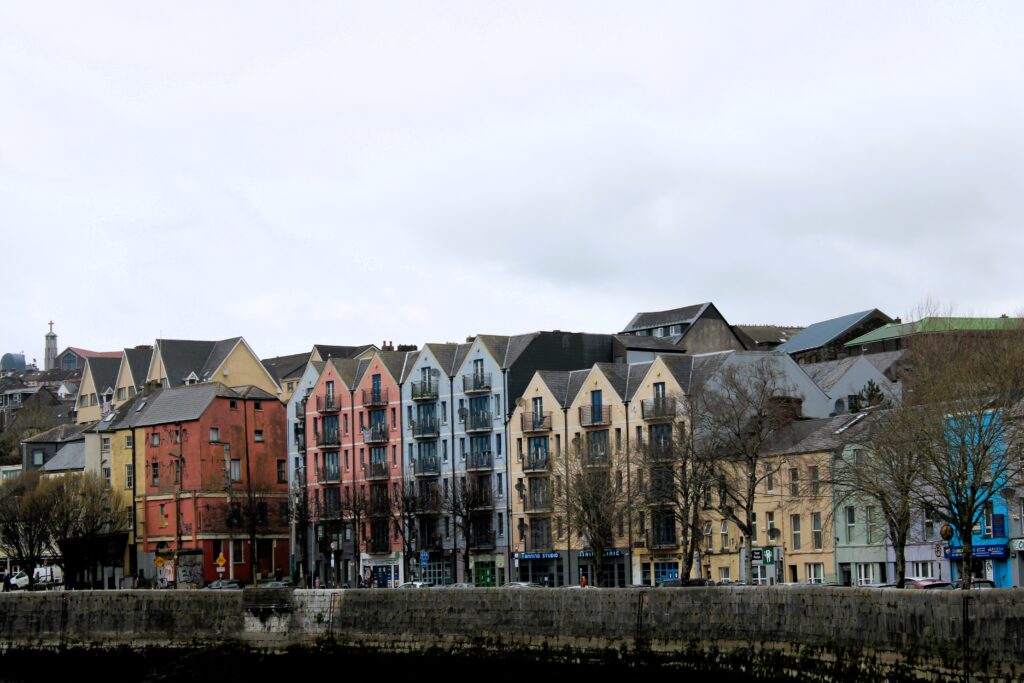
Before you head off on your road trip to Kilkenny, be sure to spend a few days (or at least a day) in Cork City. Try to tick off the city’s top sights like the world-famous English Market and the Shandon Bells (a local favorite spot). And squeeze in a visit to St Fin Barre’s Cathedral, University College Cork, and Blackrock Castle. All of these are located within the city limits, so you can walk between them.
Where to stay in Cork City: The River Lee Hotel – offering riverside rooms and stylish interiors. This is an excellent choice within walking distance of the city center.
Public transport from Cork to Kilkenny: You can catch the Dublin Coach Bus (bus no. 600) from Anderson’s Quay in Cork City. This will take around 2 hours and 35 minutes and drops you to Ormonde Street in Kilkenny.
Fermoy
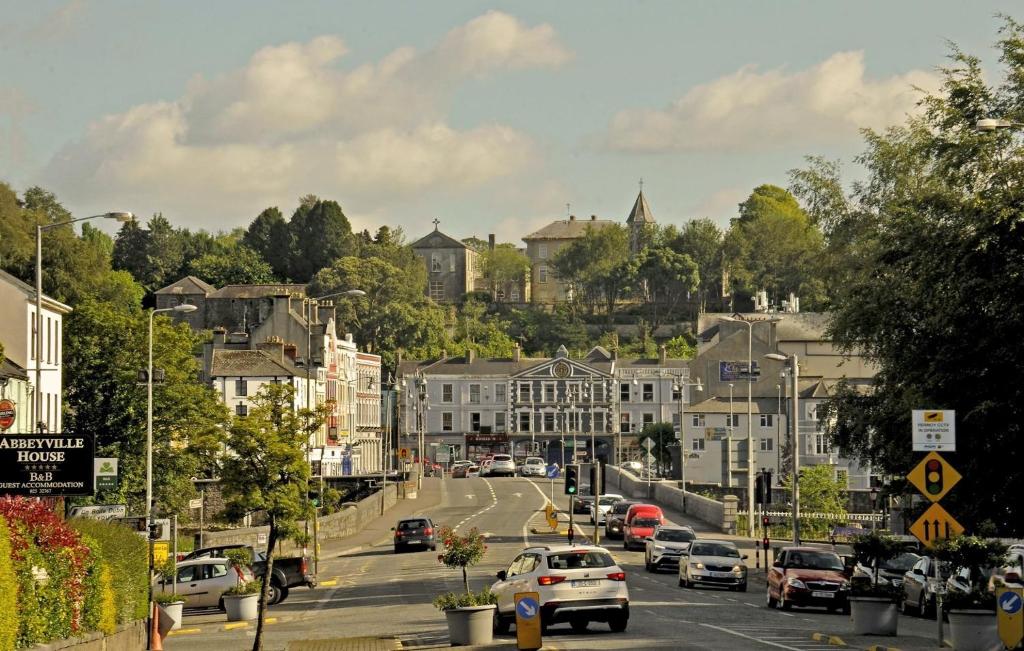
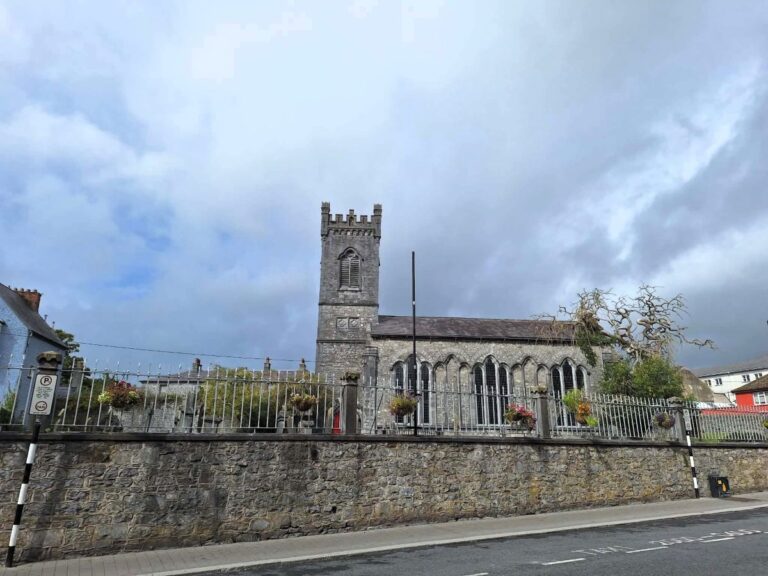
You could make a coffee stop in the charming town of Fermoy, set along the banks of the picturesque River Blackwater. It’s a historic town (founded in the 13th Century) and its heritage is evident in its well-preserved architecture and historical landmarks, including the grand Fermoy Castle and the elegant Christ Church.
You can get a glimpse of the local culture by strolling through the bustling town center. It’s an inviting town that captures the essence of rural Ireland. For coffee and a bite to eat, I like Hanna’s Market & Cafe on Patrick St.
Mitchelstown Caves
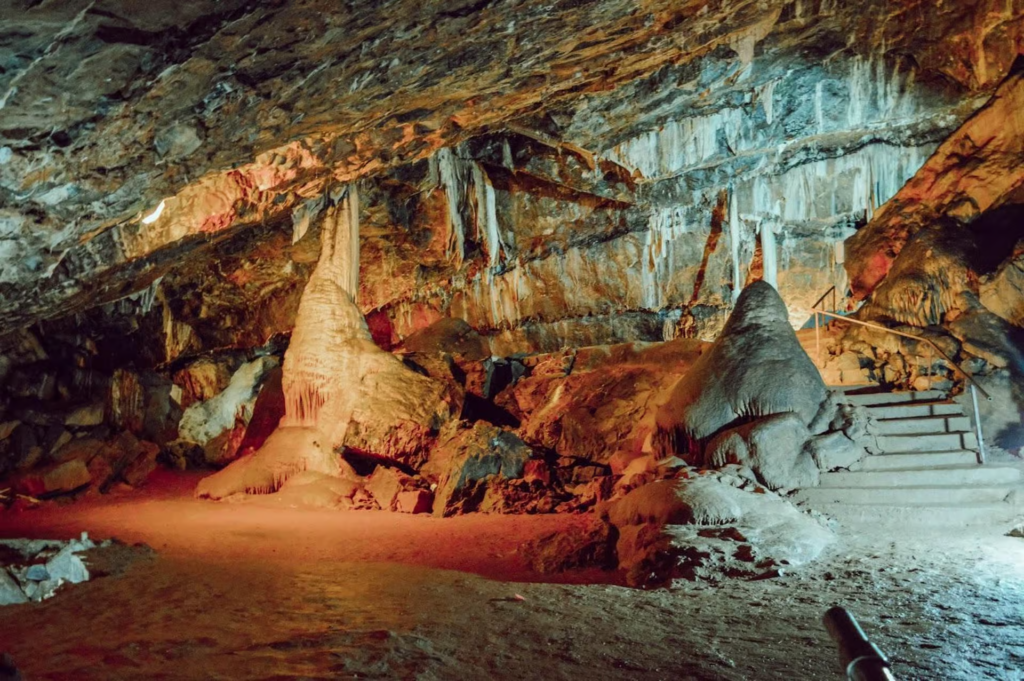
The Mitchelstown Caves are a breathtaking marvel among Europe’s caves. Its distinctive formations, vibrant colors, and rich history promise an unforgettable experience.
This major show cave immerses visitors in a timeless, sunless world, where nature’s grandeur prevails, and humans feel like visitors from another era. Guided tours lead you through three vast caverns adorned with mesmerizing dripstone formations, stalactites, and stalagmites. Elegant calcite curtains drape the sloping ceilings, while calcite crystals sparkle in the distance. Among these wonders stands the towering Tower of Babel, one of Europe’s most remarkable calcite columns.
Cahir Castle
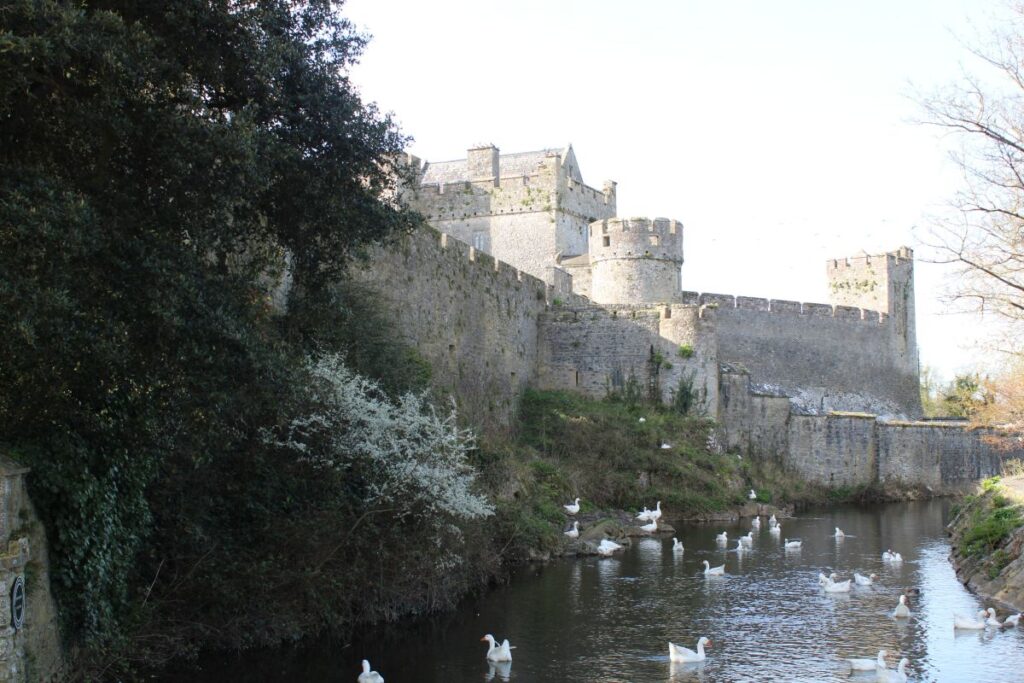
Constructed in the 13th century by the O’Brien family, it is one of Ireland’s largest and best-preserved castles. The strategic location on a rocky island in the River Suir made it an important defensive stronghold.
Over the centuries, Cahir Castle has witnessed various sieges and battles, including its capture by Oliver Cromwell’s forces in 1650. Today, the castle’s impressive keep, high walls, and beautifully restored interiors are amazing to see in-person.
Cahir Castle has also been the filming location for many movies and TV series over the years, like Excalibur (1981) and The Green Knight (2021), The Last Duel (2021), and The Tudors.
An adult ticket to the castle costs 5 euros, and kids under 12 go free.
Swiss Cottage, Cahir
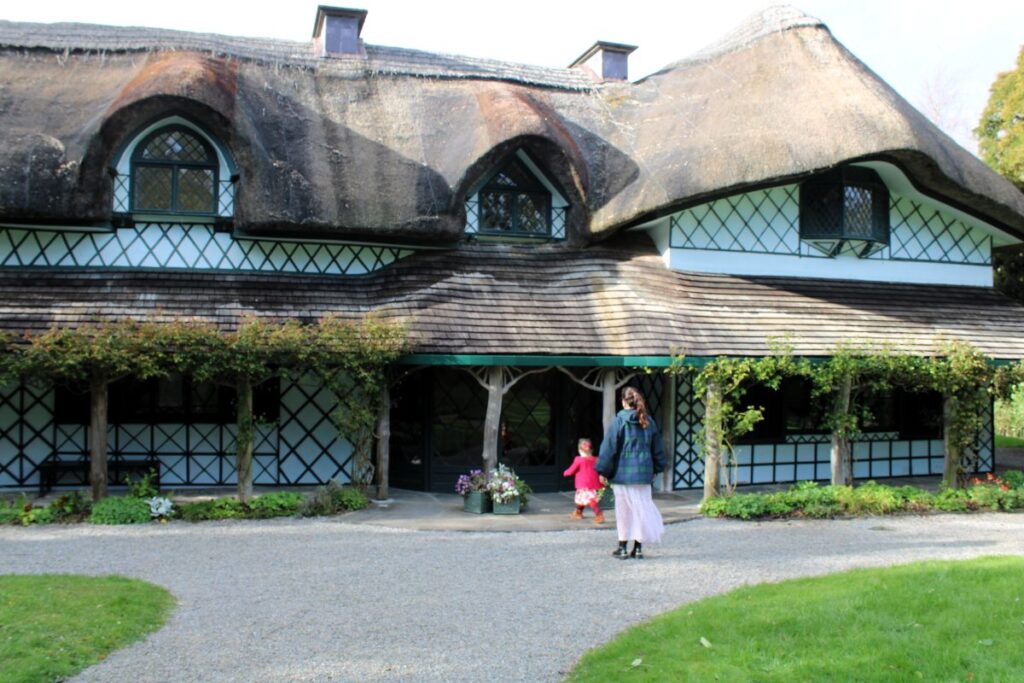
The Swiss Cottage nearby is also worth checking out while you’re in Cahir. It’s a charming example of a cottage orné – a whimsical embodiment of an idealized countryside retreat. It served as a picturesque venue for picnics, intimate gatherings, and fishing and hunting parties, while also providing a serene escape for residents of the nearby grand house.
Constructed in the early 1800s by Richard Butler, the 1st Earl of Glengall, it is believed that he successfully enlisted the renowned Regency architect John Nash to design it. Initially referred to simply as “The Cottage,” it later earned the name “Swiss Cottage” due to its resemblance to an Alpine chalet.
An adult ticket to view the outside of the house costs 5 euros, and kids under 12 go free. You can pay a little extra for a guided tour of the interior.
Cashel/ Rock of Cashel
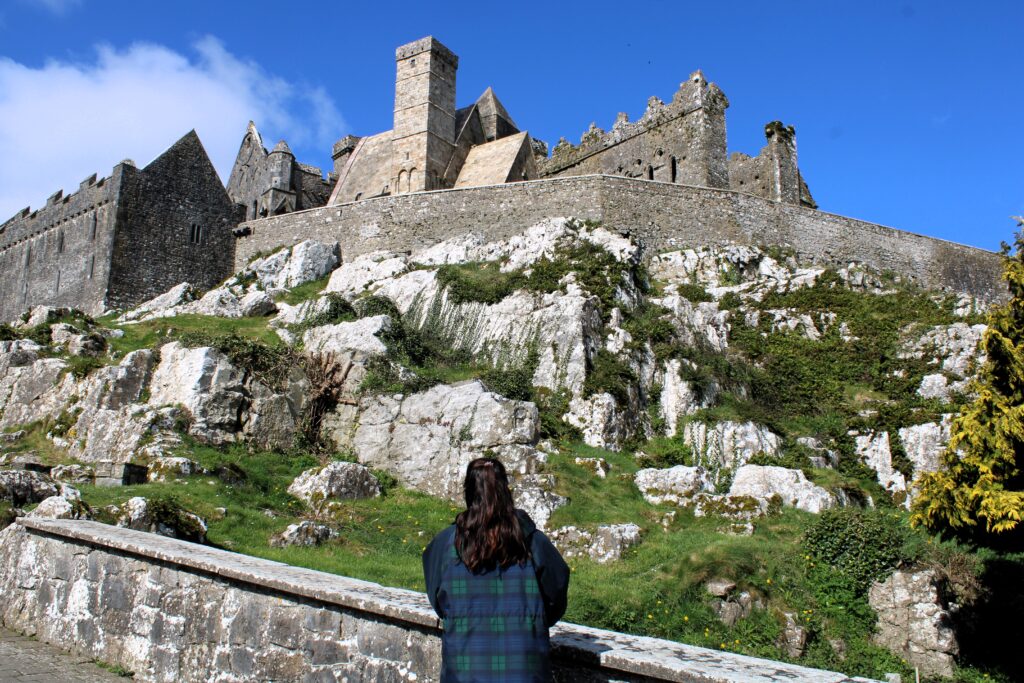
It’s highly likely that the reason you’re visiting Cashel is to see the iconic Rock of Cashel (which is a little Hogwarts-esque, if I do say so).
Yep, the Rock of Cashel, also known as St. Patrick’s Rock, is one of the most famous historic sites in County Tipperary. This striking limestone hill is crowned by an impressive collection of medieval buildings that include a round tower, a high cross, a Romanesque chapel, a Gothic cathedral, and a restored Hall of the Vicars Choral.
Steeped in legend and history, the Rock of Cashel is said to be the site where Saint Patrick converted the King of Munster to Christianity in the 5th century. It served as the traditional seat of the Kings of Munster before being gifted to the Church in 1101.
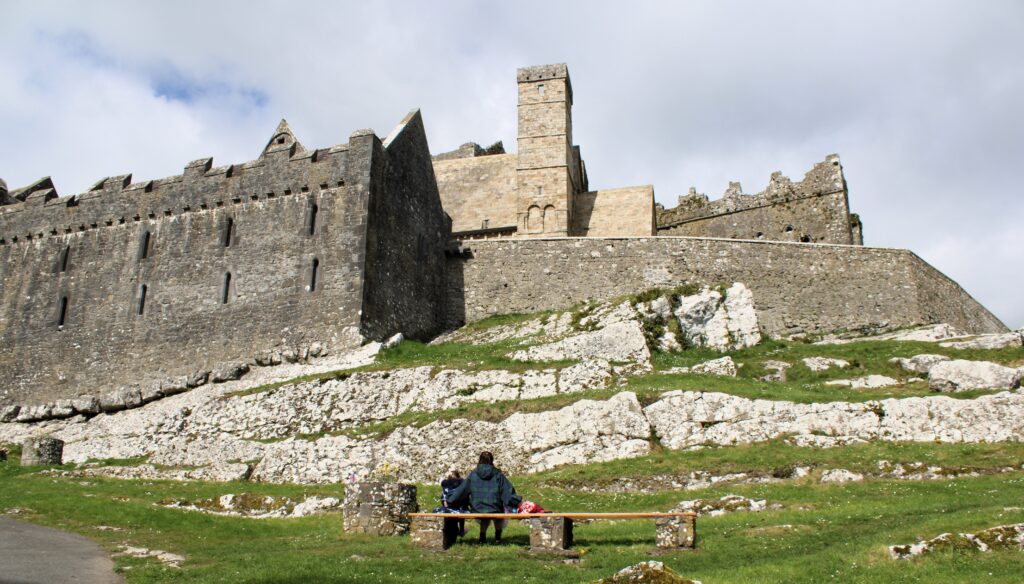
In Cashel town, you could spend an hour or so walking the main street and checking out the stores and Cafes as you go. We had lunch at the Cellar Bar (underneath the Baileys hotel), and we really enjoyed it. We also grabbed a takeaway coffee from SOS Beag.
It costs 8 euros per adult to enter the Rock of Cashel; kids under 12 are free, and there are discounted rates available for students, seniors, and older children.
Balief Castle
Hidden away in the beautiful County Kilkenny, Balief Castle is a cool spot that shows off Ireland’s awesome history and architecture. With its green surroundings and fascinating stories from the past, this amazing castle is a must-see for anyone wanting to dive into the magical vibe of Ireland’s heritage.
Kilkenny
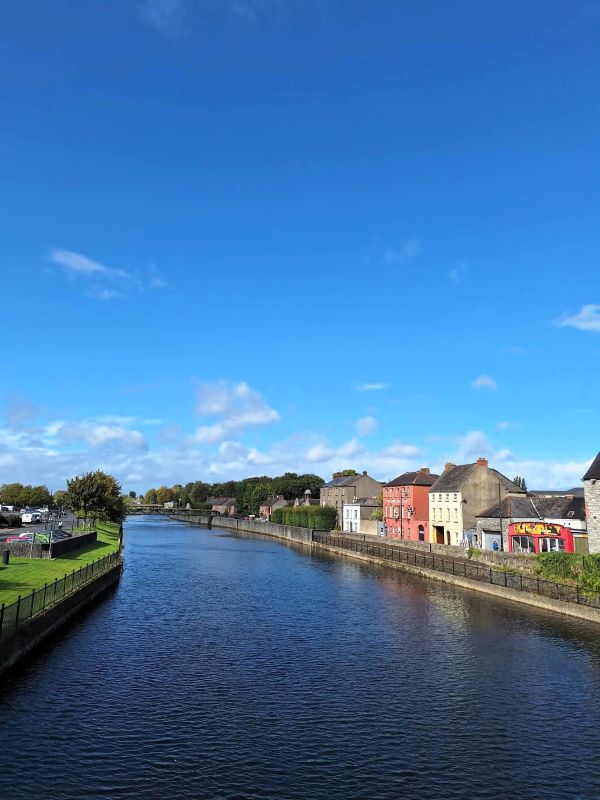
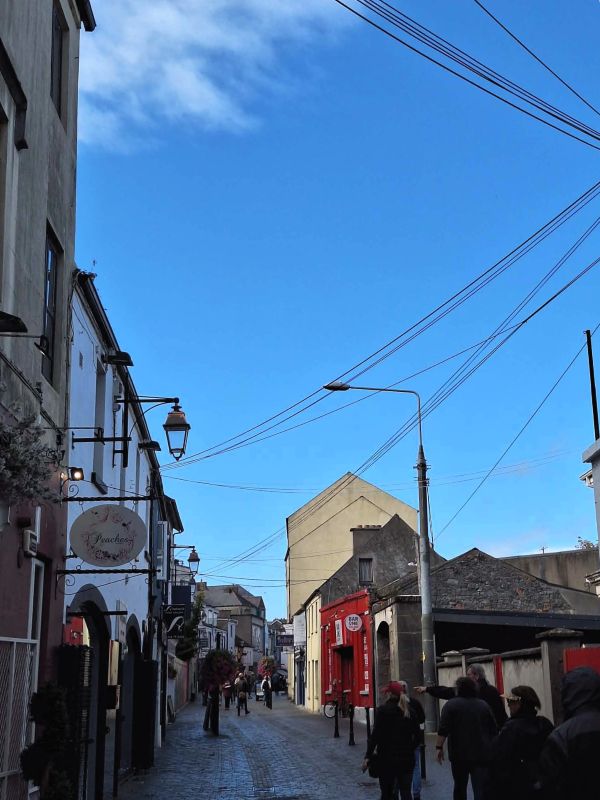
Kilkenny City, often referred to as the “Marble City,” is renowned for its medieval architecture and vibrant arts scene.
My first stop in this charming city would be the Medieval Mile, a mile-long route that stretches through the heart of the city. It links most of Kilkenny’s iconic landmarks, like the majestic Kilkenny Castle and the stunning St. Canice’s Cathedral. And as you stroll along, you will pass by medieval buildings, narrow alleyways, and charming cobblestone streets that transport you back in time.
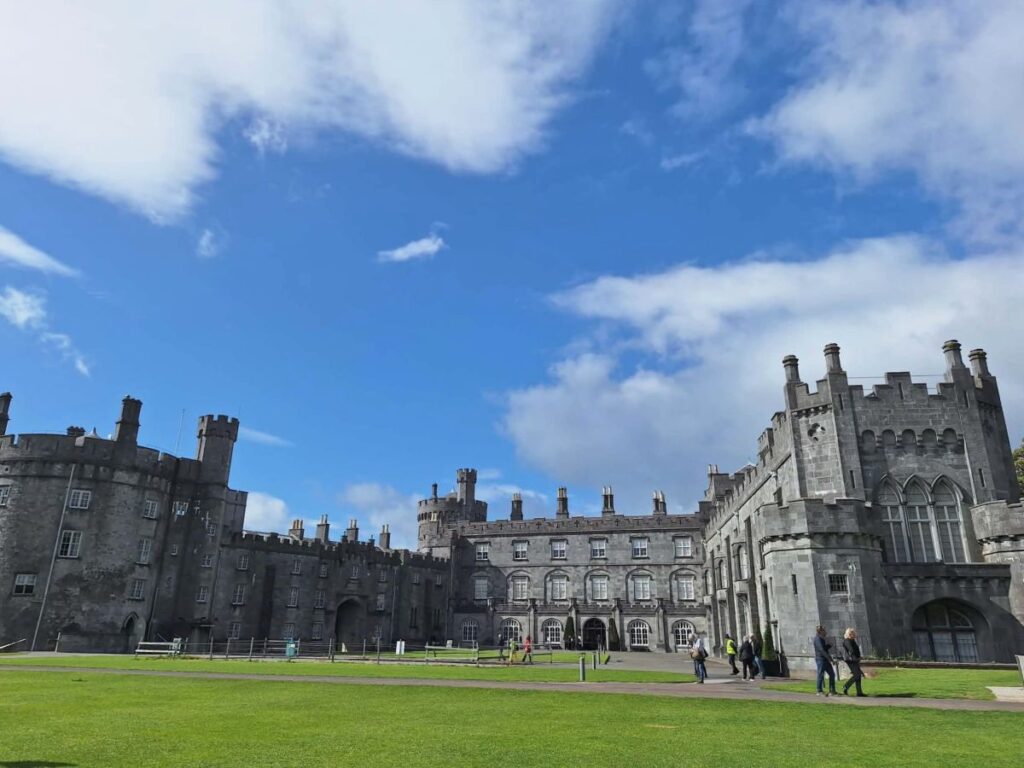
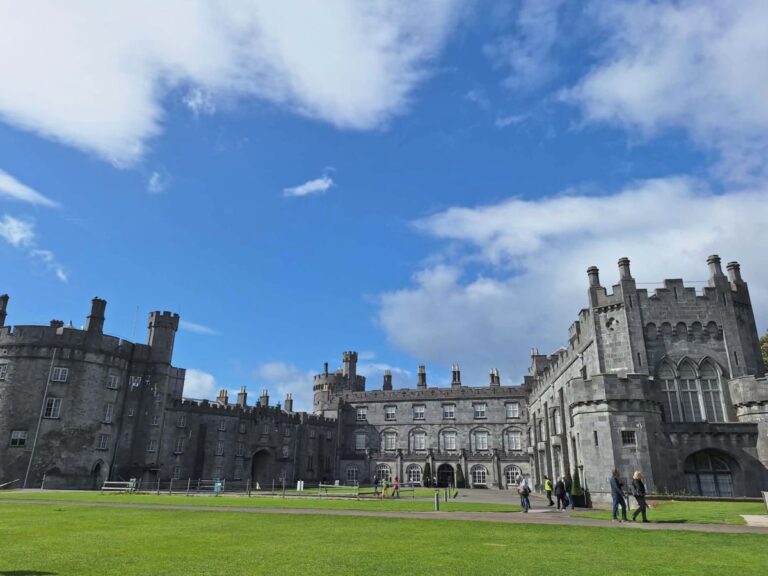
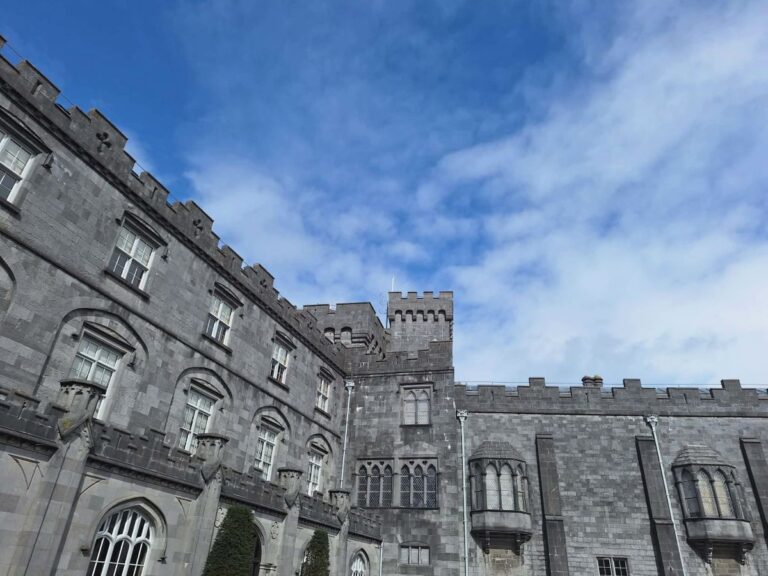
Later, take a short stroll to the iconic Kilkenny Castle. This majestic structure, dating back to 1195, is a testament to the city’s rich history. You can wander the inside on your own (like we did) or join a guided tour to learn more about the history of the castle and the Butler family, who resided there for centuries. All the rooms are beautifully restored, and the artwork and furniture are phenomenal. We spent around an hour here and a further hour wandering through the castle gardens.
Entry to the castle cost us around 8 euros per adult (it’s more if you want to book a guided tour).
And if you’re visiting with kids, I highly recommend making the 5-minute drive out to Jurassic Newpark – a Jurassic-Park-themed park that’s so much fun! We were surprised by how much there is to do here. Our daughters loved seeing the life-size moving dinosaurs, bouncing around in Jurassic Bounce, and the flying Pterosaurus ride. There are also two playgrounds here and a mini petting zoo.
Where to Stay in Kilkenny:
We stayed at the Newpark Hotel about 5 minutes drive from the center of the city. We paid 200 euros for a family room with free breakfast and free entry to the park. There’s also a swimming pool on-site, which we were able to use twice. In my opinion, it’s one of the most family-friendly hotels in Ireland.
But other hotels we considered were the River Court Hotel – a large riverside hotel in the city center and the Pembroke Hotel, which is known for its stylish decor and personalized service.
Renting a Car in Ireland
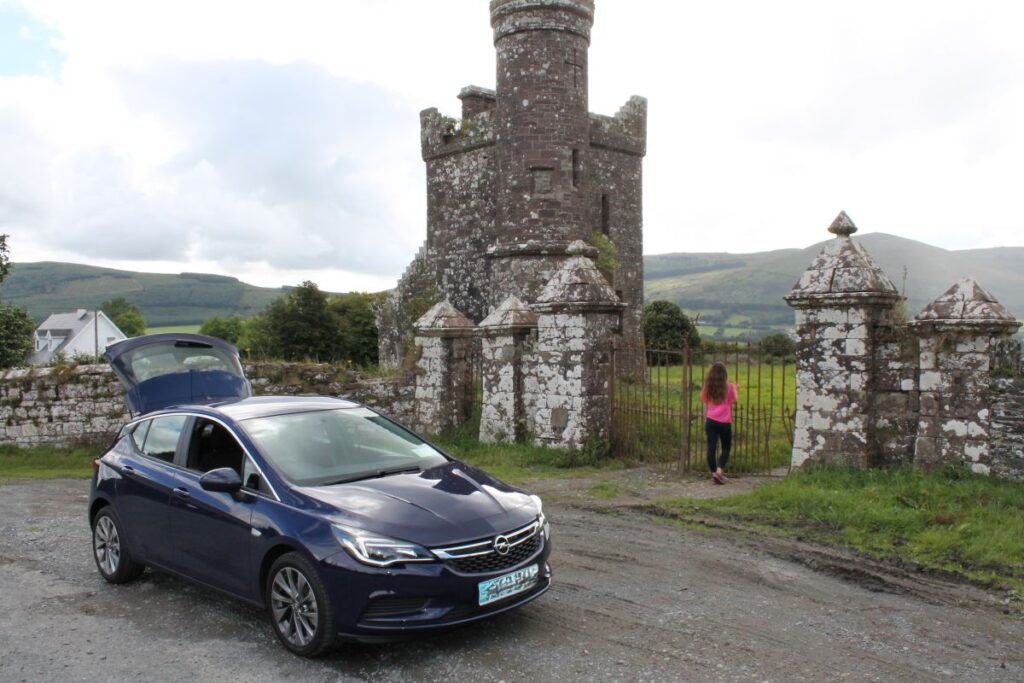
When it comes to driving in Ireland, choose a vehicle that suits your travel needs. If you’re planning to explore rural areas or rugged landscapes, consider renting a compact or four-wheel-drive vehicle, which will handle narrow, winding roads more efficiently. Be sure to book your rental car well in advance, especially during peak tourist seasons, to secure the best rates and availability.
The cost of renting a car in Ireland can be expensive. However, there are some ways you can save money. We tend to always book our rental car through Discover Cars. This is a search engine for rental cars and allows you to filter by price if you’re on a budget or by vehicle type if there’s a specific car you’re after.
- Generally speaking, you can expect to pay around €300 per week for a manual (stick shift) economy car; this will rise to around €350 during the peak months of June, July and August.
- Try to rent your vehicle from major cities such as Dublin, Cork, Galway, Belfast, and Limerick. That’s because car hire companies in smaller cities tend to have fewer and more expensive options.
- Book as small a car as you can manage!
- We highly recommend selecting fully comprehensive car insurance. The roads and car parking spaces in Ireland are narrow, so it will quell your fears of getting a bump or scratch. Check if your credit card insurance covers this (some do!)
Slainte!
I hope this guide has helped you to decide where to stop between Cork and Kilkenny. You can read some of my other related blog posts here –
27 Hidden Gems in Cork (Locals’ Guide to Cork)