Driving in Ireland: These Tips Will Come in Handy!
Ireland, known for its lush green landscapes, charming villages, and rich cultural heritage, offers one of the most enchanting road trip experiences in the world.
Driving through this picturesque island allows you to explore its hidden gems at your own pace. But the most important piece of advice I can give you today is to plan your driving route in advance. Having an idea of the type of roads you’ll be driving on, the towns you’ll pass through, and a good grasp of the road rules in Ireland will make you feel less nervous about driving here.
I get it – even though I was raised in Ireland, I left the country for over 10 years, and my first couple of months of driving when I returned were a little nerve-racking. But, let me tell you this much, driving in Ireland is not as scary as people make out, that is, provided you’re prepared (see my points above!)
So, let’s get stuck in – shall we? Whether you’re a seasoned road-tripper or a first-time visitor, this driving in Ireland guide will help you navigate the ins and outs of driving in Ireland, ensuring a stress-free and enjoyable experience.
💡Car Rental Tip: We tend to always book our rental car through Discover Cars. This is a search engine for rental cars and allows you to filter by price if you’re on a budget or by vehicle type if there’s a specific car you’re after.
Our Tips for Driving in Ireland
1. They drive on the left in Ireland
Just like in the UK, Australia, and New Zealand, they drive on the left-hand side in Ireland. So, that means that the steering wheel sits on the right-hand side of the car. Don’t be surprised if you try to get into the wrong door for much of the first day! Moreover, if you are driving a manual (which most rental cars here are), the gearstick will be on the opposite side. So it will take some time to get used to it.
If you feel a little nervous about driving on the left – then we recommend practicing in a less congested area before heading into busier traffic.
2. Roads in rural areas can be very narrow
Ireland’s roadways are as diverse as its landscapes. From modern motorways connecting major cities to quaint country lanes lined with stone walls, each stretch of road offers its own unique charm.
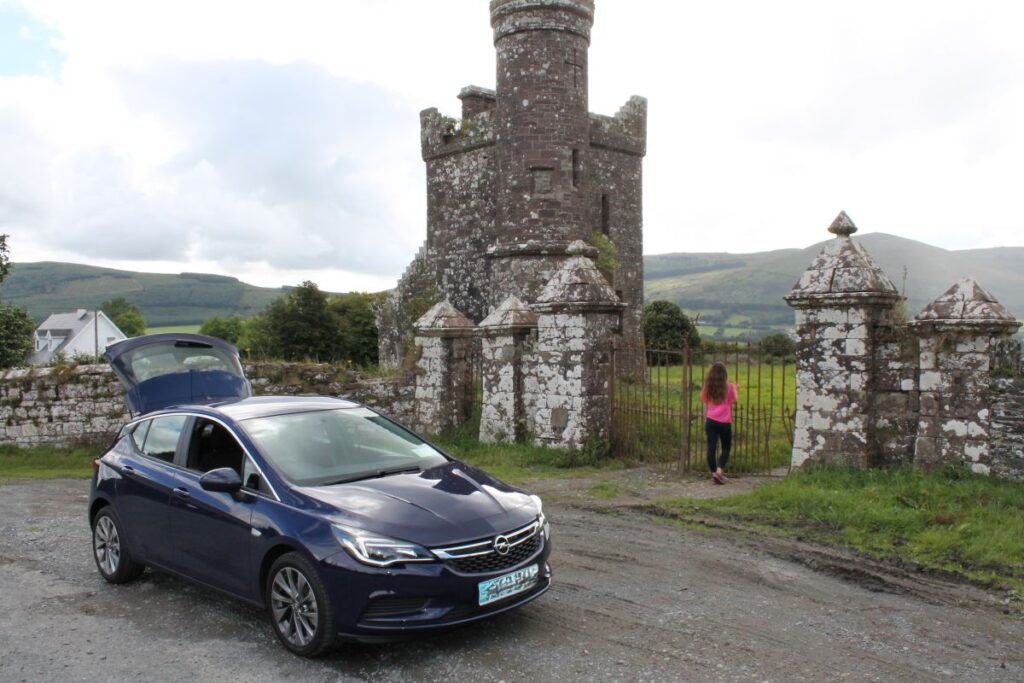
Now, most of the roads in Ireland that link towns and cities are in good condition, so you should find them easy to drive. However, in more rural areas, some of the roads can be very narrow, twisty, and dotted with potholes. Hence, it pays to drive cautiously when traveling on those. Plus, there is little to no shoulder on these roads, so you have to be careful not to drive into the ditch!
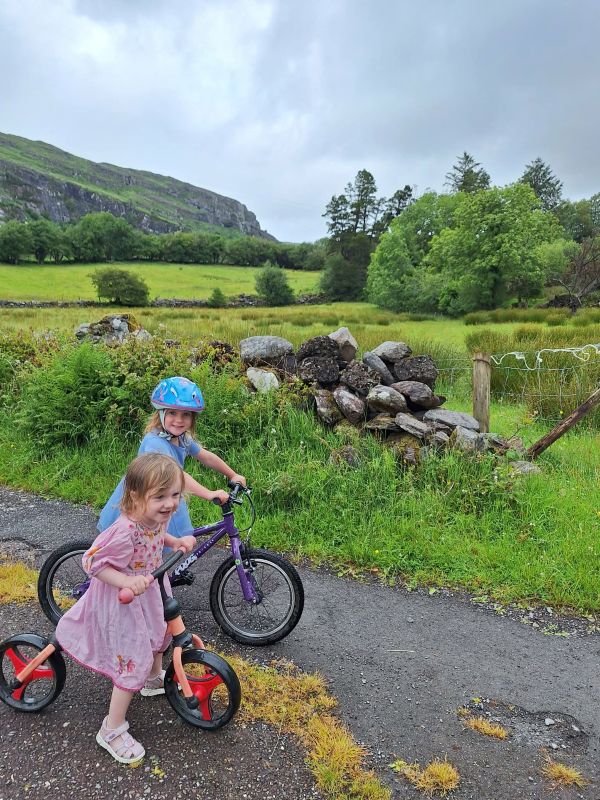
It is worth noting, too, that in some rural areas, you might experience gravel roads or really narrow roads with grass growing down the middle (if you’ve been to rural Ireland, you’ll know what I mean).
3. Understanding the road rules in Ireland is important
Ireland has some very strict road rules in place. Therefore, you should take the time to familiarise yourself with some of them to ensure you don’t break any rules that might cause you to be stopped by the gardai (police).
Of course, you need to have a valid driver’s license when driving here, and you likely won’t need to get an International Driving Permit. unless you plan on being in Ireland for more than 12 months.
In the Republic of Ireland, speed limits are in kilometers, with 50 km/h being the limit in built-up and urban areas and 100 km/h on national roads. On motorways, the speed limit is 120 km/h and on non-national roads the speed limit is 80 km/h. While in Northern Ireland, mp/h is used.
Seatbelts are mandatory for all passengers in the vehicle, including those in the backseats. Additionally, all children under 150 cm in height or 36 kg (79 lbs) in weight must use a car seat.
You are strongly recommended not to drink any alcohol and then drive. The limit is a BAC of 50mg. This means 50 milligrams of alcohol per 100 milliliters of blood.
Using mobile phones while you drive is also illegal, so if you need to make a call, either pull over somewhere safe or use hands-free or Bluetooth.
4. Driving an electric vehicle is fairly common
If you decide to rent an electric vehicle in Ireland, do not worry. There are plenty of charge points throughout the country. They are most commonly found at gas stations (called petrol stations here). And many car parks and hotels also provide charge points.
Yet, still, I would plan my route in advance if driving an electric vehicle here as in rural areas, the charging points will be very spaced out.
5. You will likely be driving a stick shift here
That’s because manual or stick shift vehicles are more prevalent than automatics. So if you need an automatic, be sure to request an automatic when renting a car, as otherwise you likely will end up with a manual transmission vehicle (stick shift).
6. Irish weather is unpredictable
Yep, Irish weather is notoriously unpredictable. And you may experience four seasons in one day (or even one hour!) Thus, it’s important to be prepared for this when driving here – if you experience a very heavy rain shower, then pull over your car safely into a pull-off bay or a parking space (if you’re driving through a town or village).
And be mindful that after rain or sleet, the roads will be slippery, so keep an adequate braking distance from the vehicle in front. Two cars is a good distance to abide by.
The roads here can also flood, so be careful not to drive through anything that looks to be too deep, as if you do, and your car gets stuck, your insurance likely won’t cover you.
7. Fueling up in Ireland is simple
As for fueling up in Ireland, you will do so at a petrol station. Just be careful – the green pump is for unleaded and the black pump is for diesel. They should be clearly marked as such. Currently, the price of petrol per liter is 171 cents and the price of diesel is 165 cents per liter.
8. There are toll roads in Ireland
There are some toll roads in Ireland. These are typically paid for at the barrier of the toll. However, the M50 is the exception to this. You must pay for this before 8 pm the next day by paying online, in branded Payzone outlets, or by calling 1890 501050.
Car hire companies are not obliged to remind you about paying the M50 toll charge, though most will give you a courtesy heads-up.
There are no toll roads in Northern Ireland.
9. Roundabouts can be confusing
Ah, the dreaded roundabout – something that confuses many tourists. But I’m here to tell you that joining a roundabout in Ireland is pretty straightforward once you get the hang of it.
As you’re coming up to the roundabout, slow down and be ready to yield to traffic already going around – cars on the roundabout have the right of way. Keep an eye out for road signs and lane markings to figure out which lane to be in based on where you’re headed. If you’re taking the first exit, use your left indicator; use your right one for any other exits.
Wait for a safe gap in the traffic before you merge in.
As you’re going around, watch out for other cars and be ready to stop for pedestrians at crossings. When you’re almost at your exit, switch to your left indicator to show you’re leaving.
10. What to do if you get in a car accident in Ireland
If you get in an accident, the first thing you should do is remain calm and not panic.
Should the accident be a minor one, try to move to a safe part of the road or parking area. Then, if the other person is not being aggressive or intimidating, exchange details with them, including their name, phone number, and car registration. Once you have done that, you will be able to continue on your way. However, you should notify your car hire company immediately to keep them in the loop.
Should the accident be more serious and require emergency services like the police or ambulance to be called, then you should phone 999 or 112 immediately. You should also let your rental company know as soon as possible, as they will be able to advise you on what you will need to do next. It will differ between companies.
What are the best drives in Ireland?
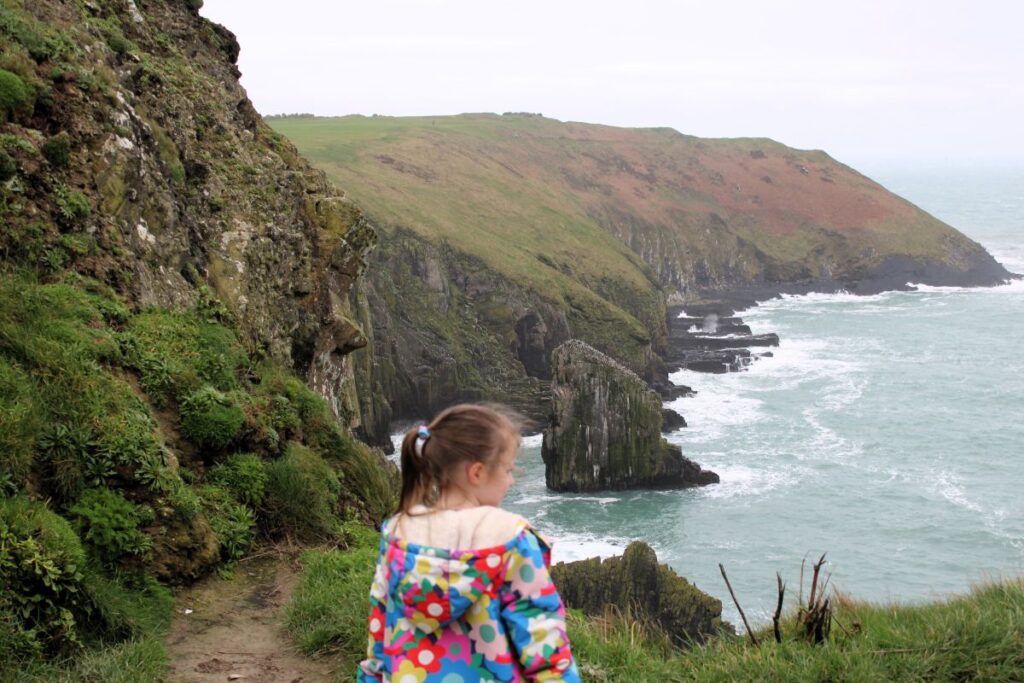
Ireland is renowned for its scenic driving routes. And there are loads of epic drives that you can embark on that showcase the country’s incredible natural beauty and rich history.
Of course, the Wild Atlantic Way is one of the most famous. And it’s my personal favorite Irish road trip. The Wild Atlantic Way runs from Kinsale in West Cork all the way to Donegal. At 2,500 km long, it is the longest coastal driving route in the world.
Another favorite drive of mine is the astoundingly beautiful Ring of Kerry. Which is 180 km long and starts in Killarney (one of the must-visit towns in Ireland). Some must-stops along the Ring of Kerry include Killarney National Park, Glenbeigh, Caherdaniel, Sneem, and Kenmare.
The Slea Head Drive, which starts and ends in the vibrant town of Dingle, is also super-popular and for good reason. It offers what I reckon is the best coastal scenery in the whole country!
In Northern Ireland, the Causeway Coast Drive is an absolute must-do. It begins in Belfast and ends in Derry and passes through the nine Glens of Antrim and the world-famous Giant’s Causeway.
Renting a car in Ireland:
When it comes to renting a car, choose a vehicle that suits your travel needs. If you’re planning to explore rural areas or rugged landscapes, consider renting a compact or four-wheel-drive vehicle, which will handle narrow, winding roads more efficiently. Be sure to book your rental car well in advance, especially during peak tourist seasons, to secure the best rates and availability.
The cost of renting a car in Ireland can be expensive. However, there are some ways you can save money. We tend to always book our rental car through Discover Cars. This is a search engine for rental cars and allows you to filter by price if you’re on a budget or by vehicle type if there’s a specific car you’re after.
✅ A few things to know about renting a car here:
- Generally speaking, you can expect to pay around €300 per week for a manual (stick shift) economy car; this will rise to around €350 during the peak months of June, July and August.
- Try to rent your vehicle from major cities such as Dublin, Cork, Galway, Belfast, and Limerick. That’s because car hire companies in smaller cities tend to have fewer and more expensive options.
- Book as small a car as you can manage!
- We highly recommend selecting fully comprehensive car insurance. The roads and car parking spaces in Ireland are narrow, so it will quell your fears of getting a bump or scratch. Check if your credit card insurance covers this (some do!)
📌 Practice makes perfect for driving in Ireland!
Because I’m someone who likes to be prepared when I travel, I’ve recently checked out Tripiamo’s Ireland Driving Guide. It’s a video driving guide that is specifically designed to teach you how to navigate Ireland’s challenging roads. It’s validated by the Irish School of Motoring and by completing this detailed driving guide (there are 11 sections), you’ll feel confident to tackle driving in Ireland. The course costs just $39.99 USD – a worthy investment, in my opinion!
Slainte!

Driving through Ireland is a truly magical experience, offering endless opportunities to explore stunning landscapes, historic sites, and vibrant towns. The freedom to create your own itinerary and discover hidden treasures along the way makes a road trip the perfect way to experience the Emerald Isle.
If I’ve missed anything or if you have any questions for me, please leave them in the comment section below.